top of page

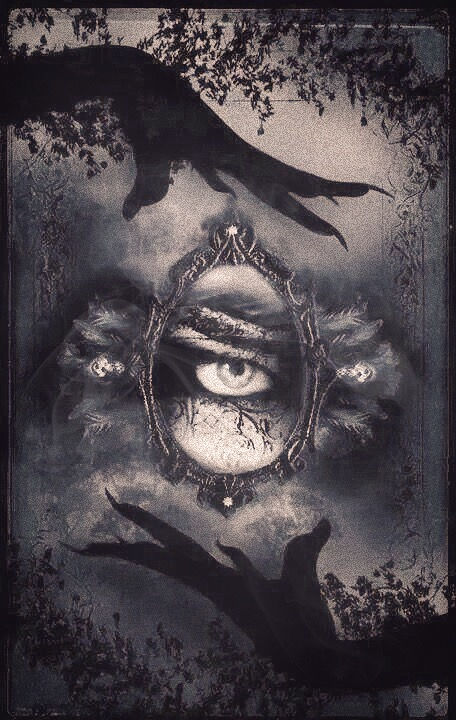
Attempts to explain prophecy: Cognition of the Future (Art from pinterest)

Attempts to explain prophecy must make suppositions about the future. The most fundamental supposition is that events in the future do not yet exist and cannot, therefore, produce effects in the present. The path of explanation that stems from this view leads, of necessity, to various ideas of the future as a potential that somehow exists in the present.


In their simplest form these ideas follow the analogy of the seed and flower. A gardener can examine a seed and predict what flower it will produce.


Some premonitions may indeed stem from clues scarcely noticed in a conscious way. An unfamiliar noise in a car, for example, may give rise to an accurate premonition of danger. The weakness of the theory, in this form, is that it requires of the precognizer an uncanny ability to analyze signs and indications that are not only imperceptible to the ordinary eye but impossible to deduce theoretically. What clues in a dreamer's environment could prompt an accurate precognition of a disaster six months and 3,000 miles away? Some extraordinary suggestions have been made to explain how the future may be unrealized but cognizable in the present.


One such suggestion, by Gerhard Dietrich Wasserman, a mathematical physicist at the University of Durham in England, is that all events exist as timeless mental patterns, with which every living and nonliving particle in the universe is associated.


This idea owes something to the ancient belief that the universe—the macrocosm—contains innumerable microcosms, each recapitulating the features and order of the large whole. Thus, man was seen as a microcosm of the earth, his veins and arteries corresponding to streams and rivers, and so on.


By the end of the 17th century the idea had undergone many transformations but was still potent. The great philosopher and mathematician Baron Gottfried Wilhelm von Leibniz, for example, wrote:


All the different classes of beings which taken together make up the universe are, in the ideas of God who knows distinctly their essential gradations, only so many ordinates of a single curve so closely united that it would be impossible to place others between any two of them, since that would imply disorder and imperfection.


Accordingly, the various orders of beings, animate and inanimate, so gradually approximate each other in their attributes and properties that they form a single chain, “so closely linked one to another that it is impossible ... to determine precisely the point at which one ends and the next begins.”


In this concept of a “chain of being,” then, the animate, and therefore the spiritual or psychic, are connected with the inanimate by a gradation of shared attributes. For Leibniz the implication was that someone with enough insight “would see the future in the present as in a mirror.


Another version of the idea that the future lies hidden in the present was advanced by Adrian Dobbs, a mathematician and physicist at the University of Cambridge, in 1965. As events unfold, he proposed, they actualize a relatively small number of the possibilities for change that exist at a subatomic level. In the process disturbances are caused that create, in another dimension of time, what Dobbs calls a psitronic wavefront. This wavefront can be registered by the brain's neurons, at least in certain especially sensitive people, and interpreted. A metaphor may help to clarify the process:


Imagine a pond, at one side of which a toy ship is launched. At the other side of the pond is a very small person. He is unable to see the ship, but as the ship travels forward, the waves it makes reach the shore on which he stands. As they travel across the pond, these waves pass around certain objects—weeds, leaves, a log—that are fixed or slowly drifting on its surface. The objects thus create disturbances in the wavefront, which the small person, who has a lifetime’s experience in these things, is able to note in fine detail. From what he learns of the wave fronts he not only obtains an image of the objects that produced them but calculates how long it will be before they drift to the shore.


In this metaphor the toy ship represents an event unfolding in time. Its course across the pond represents one of many paths it might have taken and the dimension of time it occurs in. The pond itself represents another dimension of time in which other factors are having an influence. The ship's bow wave represents Dobbs's“ psitronic wavefront,” and the small person is, of course, the neuronal apparatus that receives the wavefront and converts it to a prediction.


Granting that Dobbs’s theory is purely hypothetical and that no psitronic wave has been discovered, the difficulty is in suggesting a neuronal mechanism by which the observer distinguishes the wavefront of a particular event from the presumable maelstrom of wavefront produced by simultaneously unfolding events. Again, the farther away the event is in the future, the more numerous the wave fronts and the more complex the problem.


Such, in general, are some of the theories that regard the future as being, in some way, a potential implicitly accessible in the present, and such are the difficulties and limitations attending them.


Count Saint Germain: A man who knows everything and who never dies

Count Saint Germain was a confidant of two kings of France, a dazzlingly rich and gifted social figure, the subject of a thousand rumors — but no one knows to this day where or when he was born, who he was, or when he died. A few believe that he still lives.


It has been supposed that Saint-Germain was the natural son of the widow of Charles II of Spain, although theosophists have made a good case for his being the son of Francis Racoczi II, the prince of Transylvania. Either genealogy would place the year of his birth at about 1690. The musician Jean-Philippe Rameau was certain, however, that he had met the count in 1710, under the name of the Marquis de Montferrat, and stated that he appeared to be in his forties at the time.


The life of the self-styled count is as shadowy as his origin. He seems to have become a celebrity in the 1750s as a friend of Louis XV and his mistress Madame de Pompadour, who together spent evenings with him simply for the pleasure of his conversation. Not only was he remarkably knowledgeable, but he had other attributes—artistry as a violinist, talent as a painter, skill in alchemy and chemistry, and a largesse with precious stones.


He was known to carry jewels sewn into his clothing and was said to have presented a cross ornamented with gems to a woman he scarcely knew, because she had idly admired it. The count claimed that he had learned how to turn several small diamonds into one large one and to make pearls grow to spectacular size. It was widely suspected that he also knew the secret for making gold out of base metal.


Whether he was a genius or a charlatan, Saint-Germain had the talent to make himself noticed and the subject of gossip. But in Versailles and Paris he was embraced as the confidential adviser of Louis XV. The position earned him the envy and enmity of the kings ministers, who denounced him as an adventurer with a smooth line of talk. Matters came to a head in 1760, when the count—at the behest of the king—involved himself in foreign affairs, going behind the back of the ministry. Threatened with arrest, he was obliged to flee to England, where he stayed for a while, possibly for a period of two years.


From England Count Saint-Germain apparently went to Russia, where—it is claimed—he took part in a conspiracy that put Catherine the Great upon the throne in 1762. After that nothing much is known of the count until 1774, when Louis XVI and Marie Antoinette came to the throne.


Saint-Germain was an alchemist who, it is believed, discovered the secret of eternal life
Saint-Germain: The Immortal Count

Count Saint-Germain, whose longevity and young appearance made him seem immortal, was described as “A man who knows everything and who never dies” by his contemporary Voltaire. Some thought the count had found the “Elixir of Youth ”


Saint-Germain now returned to France. It is said that he warned the royal couple of the revolution then 15 years in the future, saying, “There will be a blood-thirsty republic, whose scepter will be the executioner s knife.” On the other hand, he consorted with many whose dabbling in the occult was actually a cover for revolutionary activities, and his real political leanings—if he had any—are still debated.


Secret societies were the fashion in prerevolutionary France, and some of them recognized Saint-Germain as an “adept,” one who knew the ancient wisdoms hinted at in the rites of the Freemasons, Rosicrucians, and Knights Templars. And it was no wonder. In relating events of centuries past, the count would deliberately lead credulous listeners to believe that he had been present. “These fools of Parisians believe that I am five hundred years old,” he once remarked to a friend. “I confirm them in this idea because I see that it gives them much pleasure—not that I am not infinitely older than I appear.” He attributed his youthful appearance in part to his abstemiousness and a diet that consisted principally of oatmeal.


Later he lived in Germany as a protégé of Prince Charles of Hesse-Kassel. Close friends, they worked together at alchemy. Most reference works say that the count died at the prince’s court on February 27, 1784. According to Maurice Magre, author of Magicians, Seers, and Mystics (1932), Prince Charles was uncommunicative about his friend's death “and turned the conversation if anyone spoke of him. His whole behavior gives color to the supposition that he was the accomplice of a pretended death.”


Many continued to insist that the count was very much alive. Documents of the Freemasons indicate that he represented French Masons at a meeting in 1785. Madame de Genlis claimed to have seen him in Vienna in 1821. Several travelers in the 1800 s were sure they saw him in the Far East and other parts of the world. Theosophist Annie Besant said that she met the count in 1896, incarnated as a “Master,” or spiritual leader. Finally, in 1972, a Frenchman named Richard Chanfray claimed to be Saint-Germain, and to prove it, he appeared on television to demonstrate that he could turn lead into gold as the legendary count was believed to have done.


© 2019 - 2026 DAILY STRANGE ALL RIGHTS RESERVED ™

bottom of page