top of page

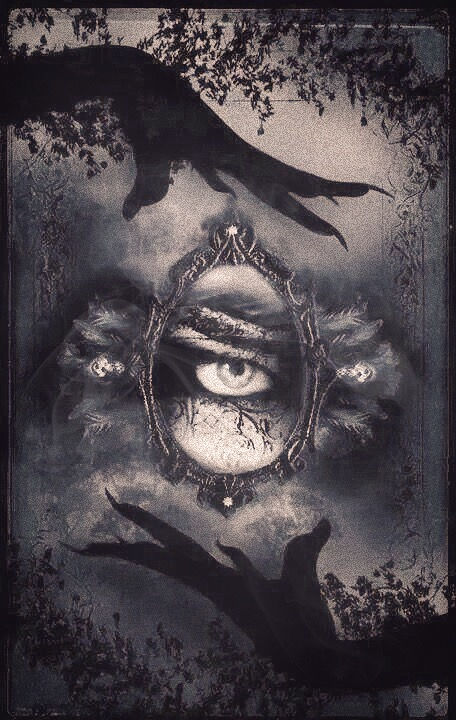
Attempts to explain prophecy: Cognition of the Future (Art from pinterest)

Attempts to explain prophecy must make suppositions about the future. The most fundamental supposition is that events in the future do not yet exist and cannot, therefore, produce effects in the present. The path of explanation that stems from this view leads, of necessity, to various ideas of the future as a potential that somehow exists in the present.


In their simplest form these ideas follow the analogy of the seed and flower. A gardener can examine a seed and predict what flower it will produce.


Some premonitions may indeed stem from clues scarcely noticed in a conscious way. An unfamiliar noise in a car, for example, may give rise to an accurate premonition of danger. The weakness of the theory, in this form, is that it requires of the precognizer an uncanny ability to analyze signs and indications that are not only imperceptible to the ordinary eye but impossible to deduce theoretically. What clues in a dreamer's environment could prompt an accurate precognition of a disaster six months and 3,000 miles away? Some extraordinary suggestions have been made to explain how the future may be unrealized but cognizable in the present.


One such suggestion, by Gerhard Dietrich Wasserman, a mathematical physicist at the University of Durham in England, is that all events exist as timeless mental patterns, with which every living and nonliving particle in the universe is associated.


This idea owes something to the ancient belief that the universe—the macrocosm—contains innumerable microcosms, each recapitulating the features and order of the large whole. Thus, man was seen as a microcosm of the earth, his veins and arteries corresponding to streams and rivers, and so on.


By the end of the 17th century the idea had undergone many transformations but was still potent. The great philosopher and mathematician Baron Gottfried Wilhelm von Leibniz, for example, wrote:


All the different classes of beings which taken together make up the universe are, in the ideas of God who knows distinctly their essential gradations, only so many ordinates of a single curve so closely united that it would be impossible to place others between any two of them, since that would imply disorder and imperfection.


Accordingly, the various orders of beings, animate and inanimate, so gradually approximate each other in their attributes and properties that they form a single chain, “so closely linked one to another that it is impossible ... to determine precisely the point at which one ends and the next begins.”


In this concept of a “chain of being,” then, the animate, and therefore the spiritual or psychic, are connected with the inanimate by a gradation of shared attributes. For Leibniz the implication was that someone with enough insight “would see the future in the present as in a mirror.


Another version of the idea that the future lies hidden in the present was advanced by Adrian Dobbs, a mathematician and physicist at the University of Cambridge, in 1965. As events unfold, he proposed, they actualize a relatively small number of the possibilities for change that exist at a subatomic level. In the process disturbances are caused that create, in another dimension of time, what Dobbs calls a psitronic wavefront. This wavefront can be registered by the brain's neurons, at least in certain especially sensitive people, and interpreted. A metaphor may help to clarify the process:


Imagine a pond, at one side of which a toy ship is launched. At the other side of the pond is a very small person. He is unable to see the ship, but as the ship travels forward, the waves it makes reach the shore on which he stands. As they travel across the pond, these waves pass around certain objects—weeds, leaves, a log—that are fixed or slowly drifting on its surface. The objects thus create disturbances in the wavefront, which the small person, who has a lifetime’s experience in these things, is able to note in fine detail. From what he learns of the wave fronts he not only obtains an image of the objects that produced them but calculates how long it will be before they drift to the shore.


In this metaphor the toy ship represents an event unfolding in time. Its course across the pond represents one of many paths it might have taken and the dimension of time it occurs in. The pond itself represents another dimension of time in which other factors are having an influence. The ship's bow wave represents Dobbs's“ psitronic wavefront,” and the small person is, of course, the neuronal apparatus that receives the wavefront and converts it to a prediction.


Granting that Dobbs’s theory is purely hypothetical and that no psitronic wave has been discovered, the difficulty is in suggesting a neuronal mechanism by which the observer distinguishes the wavefront of a particular event from the presumable maelstrom of wavefront produced by simultaneously unfolding events. Again, the farther away the event is in the future, the more numerous the wave fronts and the more complex the problem.


Such, in general, are some of the theories that regard the future as being, in some way, a potential implicitly accessible in the present, and such are the difficulties and limitations attending them.


1400s Henry V Of England Speaking Poster by Vintage Images

Robert Nixon, a rural visionary who, by reputation, was held to be mentally retarded, was born around 1467 on a farm in the county of Cheshire, England. He began his working life as a plowboy, being too stupid, by all appearances, to do anything else. He was mostly a silent youth, though sometimes given to strange, incomprehensible babblings that were taken to be a sign of his limited mentality.


One day, however, while he was plowing a field, he paused in his work, looked around him in a strange way, and exclaimed: “Now Dick! Now Harry! Oh, ill done, Dick! Oh, well done, Harry! Harry has gained the day!” This outcry, more cogent than most, though still incomprehensible, puzzled Roberts fellow workers, but the next day everything was made clear: at the very moment of Roberts strange seizure King Richard III had been killed at Bosworth Field, and the victor of that decisive battle, Henry Tudor, was now proclaimed Henry VII of England.


When Henry Tudor was crowned King Henry VII after the defeat and death of Richard III at Bosworth Fields the event was “seen” from afar by a clairvoyant plowboy.


Before long, news of the bucolic seer reached the new king, who was much intrigued and wanted to meet him. An envoy was sent from London to escort Nixon back to the palace. Even before the envoy left the court, Robert knew he was coming and was thrown into a fit of great distress, running about the town of Over and crying out that Henry had sent for him, and he would be clammed — starved to death!

In the meantime Henry had decided on a method of testing the young prophet, and when Nixon was shown into his presence the king appeared to be greatly troubled. He had lost a valuable diamond, he explained. Could Nixon help him locate it? Nixon calmly replied, in the words of a proverb, that those who hide can find. Henry had, of course, hidden the diamond and was so impressed by the plowboy s answer that he ordered a record to be made of everything the lad said. What he said, duly interpreted, forecast the English civil wars, the death and abdication of kings, and war with France. He also forecast that the town of Nantwich, in Cheshire, would be swept away by a flood, though this has not yet happened.


But the prophecy that most concerned Nixon was the most improbable of all: that he would starve to death in the royal palace. To allay these fears, Henry ordered that Nixon should be given all the food he wanted, whenever he wanted it, an order that did not endear the strange young man to the royal kitchen (whose staff, in any case, envied his privileges).


One day, however, the king left London, leaving Robert in the care of one of his officers. To protect his charge from the malice of the palace domestics, the officer thoughtfully locked him safely in the king’s own closet. The officer was then also called away from London on urgent business and forgot to leave the key or instructions for Roberts release. By the time he returned, Robert had starved to death.


SOURCE: (Charles Mackay, Extraordinary Popular Delusions and the Madness of Crowds, pp.277-80)


Consulting the Oracle by John William Waterhouse (1884)

Oracles were an accepted part of the political and private life in the ancient world, and the most famous of them remained powerful for many centuries. Valuable gifts were bestowed on them by optimistic or thankful inquirers, and lots of the shrines put great riches. Every oracle had its own system of divination. The oracle at Dodona, by way of instance, the oldest in Greece, was an oak tree whose oracles were translated by a priest in the rustling of its leaves, the cooing of doves in its branches, and the clanking of the brass vessels hung from it. The success and reputation of the oracles were as changeable as their approaches, and a distressed inquirer, without prior loyalties involved, might be unsure as to where to turn for support. This was the position where Croesus, the inordinately wealthy king of Lydia from the mid-sixth century B.C., found himself when the strength and ambition of his Persian neighbors grew to alarming proportions under the rule of Cyrus the Great. What threat did Cyrus present to Lydia, and whom would the king of Lydia most profitably ally himself to forestall the threat?

These were important questions confronting Croesus, and he felt the need of oracular assistance. There were six famous ones in Greece and one in Egypt, and each had its own passionate devotees. Croesus therefore decided to approach the issue scientifically, by analyzing the oracles before committing himself. Seven messengers, one to every shrine, were discharged from Lydia on exactly the exact same day and told to present their question just 100 days from the departure date. Each was then to return to Lydia with the response with all speed. In the temple of Apollo, the individual origin of the oracle, traditionally a woman called the Pythoness, sat on a golden tripod over a deep cleft in the rock, chewing leaves of the laurel, sacred to Apollo, and inhaling the fumes which rose around her from the cleft. Her mutterings when presented with a question were feverish and incomprehensible and were interpreted for the questioner, usually in verse, by the attendant priest.


Croesus' messenger had barely set foot in the shrine Once the oracle spoke, without even waiting for his query:


I can count the sands, and I can measure the ocean;


I have ears for the silent and know what the dumb man meaneth;


Lo! On my sense there strike the smell of a shell-covered tortoise,


Boiling now on a fire, with the flesh of a lamb in a caldron


—Brass is the vessel below, and brass the cover above it.


This reply was taken back to Croesus, and he unhesitatingly placed his trust in the oracle of Delphi. For after much consideration he had chosen to perform on the day of the test the most improbable act he could think of. And so he had taken a lamb and a tortoise, cut them into pieces, and set them to boil together in a brass cauldron with a brass lid.

© 2019 - 2026 DAILY STRANGE ALL RIGHTS RESERVED ™

bottom of page