top of page

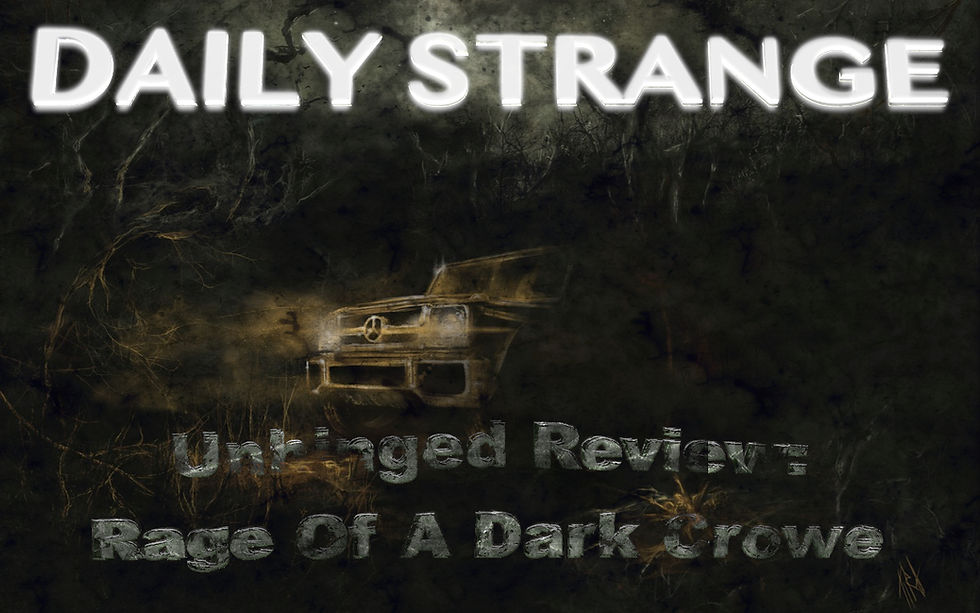
Unhinged Review : Rage of A Dark Crowe

The smallest provocation, a seemingly innocuous argument, or maybe a small scuffle is able to result in terrible consequences. That is the reality of the earth we are living in and' Unhinged' tries to examine this. It opens using a diabolical arena of arson accompanied by a montage of individuals on the advantage, reacting violently in the everyday lives of theirs. Cut to Rachel (Caren Pistorius), one mom is intending to find out her planet turn upside down since she winds up invoking an unstable serial destroyer played by Russel Crowe. A hairstylist by career, Rachel has already been creating a terrible working day, running very late, along with getting caught in traffic while dropping her teenage son to school. To add to the woes of her, a pickup truck ahead of her with a traffic light just will not move. She honks difficult and moves on, though the driver on the pickup truck (Crowe) chases the down of her and asks her to apologize. They indulge in a slight spoken duel, but Rachel does not offer in and what uses is a nightmare, you would not wish upon the worst enemy of yours.


UNHINGED OFFICIAL MOVIE TRAILER


Director Derrick Borte and his writer Carl Ellsworth opt for a tried and tried plot of a destroyer on the rampage with no ample reason. Nevertheless, they execute it deftly by generating enough thrill and tension like it sends chills down the spine of yours, every moment Crowe's character is intending to strike. While the overarching storyline is predictable,' Unhinged' engages several novel ideas about urban terror, unleashed by way of a smartphone. The activity, for probably the most part, is edgy, and additionally, the automobile chase scenes would be the most thrilling. There's quite a good deal of violence as well as bloodshed. One particular espresso store arena concerning Rachel's friend/divorce lawyer Jimmi Simpson as well as Crowe is profoundly unsettling. Very much like the thought of creating a random male ruining your whole life only since you honked at him.


Russel Crowe is acknowledged solely as' The Man' to underline the film's tagline - he is able to turn out to anybody. While it is tough to picture Crowe's sagely and cherubic deal with to be therefore terrorizing, since the film progresses, it gets increasingly hard to give his character any advantage of the doubt. Crowe is not most suitable for such a character and one also wonders exactly why he will say sure to a role which is really so poorly etched it hardly justifies any of the actions of his. We get practically nothing of the backstory of his. All we know is he's extremely, angry, and resentful dangerous. Caren Pistorius looks way too young to become the mom of a teen but seems to yank above different amounts of concern as' The Man' can make the life of her a living hell. The majority of the characters and shows are strictly passable.


'Unhinged' is not the greatest road rage movie to possess hit the marquee, though it can generate to your house its point' bloody' effectively. And it can so with much less gunplay and much more horsepower.

A Note From the Dark

Why we write what others prefer to dismiss

By Stanislav Farada (Paranormal Investigator & Writer — Moscow, Russia)


A ruined room, a watchful silhouette, and a single light—because even in the darkest genres, we’re here to keep the record straight.


Let’s be precise about the dark.


I am not speaking of the theatrical kind — the cheap darkness manufactured for clicks, the gore that substitutes for atmosphere, the noise that pretends to be fear. That is not darkness. That is a product.


I mean the other kind.


A discarded armchair collapses into mud—its torn fabric framing a scream that may be nothing but a mask, and still feels like a witness.


The liminal dark: the interval where you cannot yet name what is present. The moment before the mind decides what shape to assign to uncertainty. The quiet gap where imagination hesitates, and that hesitation becomes pressure in the room.


A nightmare figure at the edge of the screen—proof that horror’s icons are built from repetition, design, and dread.”


Most people think darkness is “out there.”


It is not. Not at first.


It begins inside you as an absence of information. A blank space. Then you read a sentence, watch a scene, hear a sound — and the blank fills. The brain does what it is built to do: it predicts. It completes. It constructs. It turns uncertainty into form.


A house half-swallowed by ivy—where silence gathers, and the past refuses to stay buried.


A corridor appears.


A staircase appears.


A closed door appears.


A shape behind glass appears.

You did not invent these images in full. You recognise them because they are part of the human operating system. We have been trained by stories, by memory, by culture, and by our own private experiences. Fear is not merely an emotion. It is an interpretive mechanism.


That is why these genres matter.


Fantasy, horror, and science fiction are not frivolous entertainment. They are cultural instruments. They expose what societies prefer to conceal in daylight: obsession, taboo, power, guilt, surveillance, and the problem of meaning. They are where communities confess their anxieties without admitting they are confessions.


When people dismiss genre, they are often trying to protect themselves from what genre reveals.


Daily Strange exists for readers who do not need that protection.


But we are not here to worship the dark either.


We do not preach belief. We do not manufacture evidence. We do not sell hysteria. We do not use fear as decoration. If we discuss the supernatural, we will state clearly what is documented, what is claimed, and what is theory. If we discuss rumours, we will label them as rumours. If we cannot verify something, we will say so without embarrassment.


This is not a paranormal circus.


This is an editorial space.


A place where the strange is treated with discipline.


What you can expect here


You will find reviews, but not the consumer kind — not the star-rating economy. We’re not here to tell you what to buy. We’re here to examine craft: structure, atmosphere, pacing, symbolism, and the cultural machinery behind the work. If a film fails, we will say why without cruelty. If it succeeds, we will say how without worship.

You will find editorials that do not pretend genre is separate from the real world. Why does one era fear possession while another fears data collection? Why do we keep returning to the same images — the mirror, the corridor, the basement, the figure at the edge of the frame? Why do certain myths survive across continents with minimal change? Those are not fan questions. They are cultural questions.


You will find strange cases approached like casework: with careful language, clear boundaries, and sources. Some anomalies are psychological. Some are environmental. Some are misunderstandings. Some are hoaxes. A smaller number remain unresolved, not because the supernatural is proven, but because the evidence does not close the file.


And yes, you will find imagery. Genre is visual. We will not pretend otherwise. But we do not traffic in explicit violence as a substitute for thought. We leave shock-for-shock’s-sake elsewhere. If disturbing material is discussed, it will be because it matters — because it carries meaning, context, and consequence.


Why we refuse the lazy sneer

There is a particular kind of criticism that has become fashionable: the lazy sneer. The assumption that horror is mindless, that fantasy is childish, that science fiction is cold machinery. The suggestion that people who love these works must be broken, immature, or “morally suspect.”


This is ignorance wearing confidence.


Genre has always done serious work. It addresses what polite conversation avoids. It gives language to dread, grief, obsession, and the violence embedded in institutions. It interrogates power. It tests reality. It asks what happens when the world stops behaving as promised.


When mainstream commentary attacks genre without doing the work — without reading, without watching, without thinking — we will answer.


Not with outrage.

With clarity.

With context.

With evidence.


The boundary we will not cross

There is a difference between the strange and the dishonest.


Daily Strange does not publish fabricated “sources.” We do not invent police reports, court documents, or witness statements. If a story is a reconstruction based on documented patterns, we label it. If a claim is unverified, we say so. If a source exists, we cite it properly. Our writing can be atmospheric, but the documentation must be clean.


The dark is not improved by lying about it.


It is weakened by it.


Who this is for

If you are a reader who feels more awake at the edge of the unknown, you are in the right place.


If you are a creator tired of being treated as a joke, you are in the right place.


If you want the strange without hysteria — the dark without cheapness — you are in the right place.


We do not promise comfort.


We promise attention.


© 2019 - 2026 DAILY STRANGE ALL RIGHTS RESERVED ™

bottom of page